
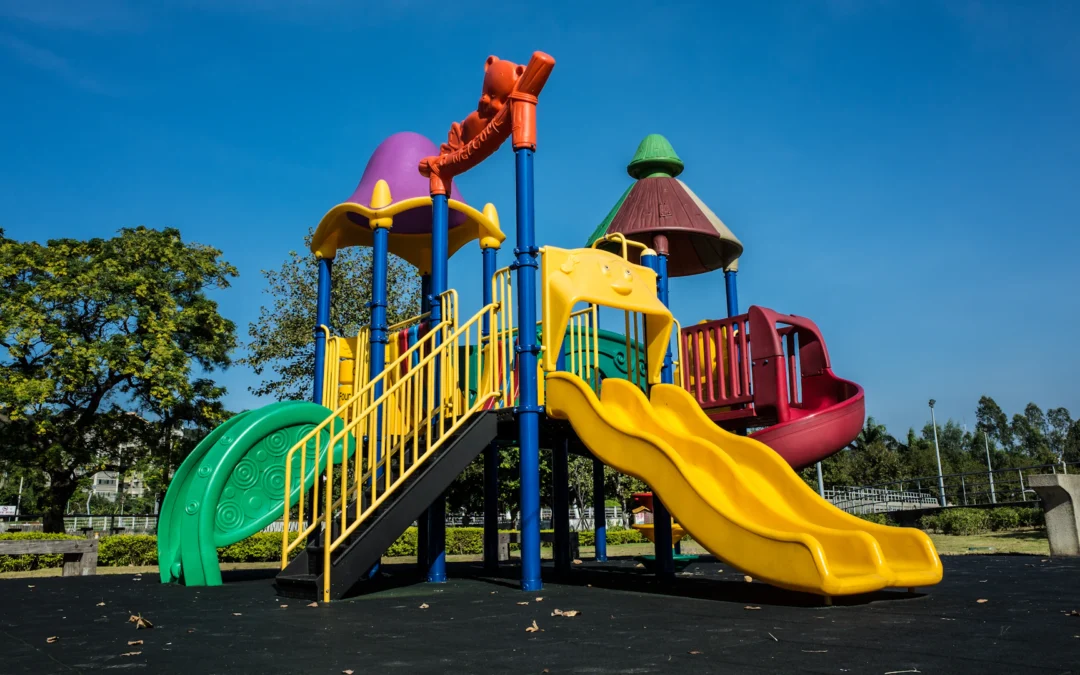
There is a quiet revolution happening on Colorado playgrounds. Walk through a recently renovated schoolyard in the Denver metro area, visit a newly installed park in Douglas County, or tour a daycare facility that just completed an outdoor upgrade, and you will notice something different about the equipment. It is heavier. It is more substantial. It looks like it was built to last decades rather than a few seasons. It is designed with ramps and accessible routes alongside climbing structures and slides in a way that older playgrounds never were. And it is almost certainly made from commercial-grade metal rather than the residential wood or plastic equipment that used to be the default for outdoor play spaces. Colorado schools, parks, daycares, and community organizations are investing in metal commercial playground equipment at a rate that reflects a fundamental shift in how facility administrators think about outdoor play infrastructure, and Rainbow Play Systems of Colorado is the local team bringing that equipment to communities across the state.
Why Metal Commercial Playground Equipment Is Having Its Moment in Colorado
The shift toward metal commercial playground equipment in Colorado is being driven by a convergence of trends that are reshaping how schools, parks, and youth facilities think about outdoor play infrastructure.
The first driver is durability. Colorado’s climate is genuinely demanding for outdoor equipment. UV exposure at altitude accelerates the degradation of plastic components and the weathering of wood in ways that are more severe than at lower elevations. Freeze-thaw cycles stress joints, fasteners, and structural connections in ways that cheaper equipment does not withstand over time. And the active, physically demanding play style of Colorado kids puts real stress on equipment that was not designed for commercial use intensity.
Metal commercial playground equipment is engineered for exactly these conditions. Galvanized steel structural components resist corrosion in ways that wood cannot over time. Powder-coated finishes withstand UV exposure at Colorado’s elevation without the fading and cracking that affect lower-quality finishes. And the structural engineering behind commercial grade equipment is designed for the load ratings and use intensity that a school or park environment produces, not the lighter residential use that equipment sold to individual families is rated for.
The second driver is inclusion. Inclusive playground design that serves children of all abilities alongside typically developing children has become a priority for many communities. The 2010 ADA Standards for Accessible Design include specific requirements for play areas, and school districts, municipalities, and community organizations across Colorado are working to bring older playground infrastructure into compliance. Modern metal commercial playground equipment is designed from the ground up with accessible routes, transfer stations, sensory play elements, and ground-level activities that serve children with mobility limitations, sensory processing differences, and developmental differences alongside the climbing structures and slides that all kids love.
Discover Rainbow’s commercial playground equipment that is safe, durable, and fun for schools, parks, and communities provides an overview of the commercial playground equipment that Rainbow Play Systems of Colorado brings to school and park installations across the state.
What Makes Commercial Grade Metal Different From Residential Equipment
The distinction between commercial grade metal playground equipment and residential equipment is not just a marketing category. It reflects real differences in engineering, materials, load ratings, safety testing, and expected service life that matter enormously for a school, park, or daycare that is responsible for the safety of the children who use the equipment.
Commercial grade metal playground equipment is designed and tested to meet ASTM International safety standards for public playground equipment, which are significantly more stringent than the standards that apply to residential equipment. These standards cover structural load ratings, entrapment hazards, fall zone requirements, and surface impact attenuation in ways that determine whether equipment is appropriate for unsupervised public use by large numbers of children across a wide age range.
The structural components of commercial grade equipment use heavier gauge steel with surface treatments that are rated for outdoor exposure over a service life measured in decades rather than years. Fasteners are typically stainless steel or hot-dipped galvanized to resist corrosion in outdoor environments. Sliding and pivoting components are engineered for the use cycles that a school or park environment produces, which can be orders of magnitude higher than what residential equipment experiences.
For a school principal, a parks director, or a daycare administrator who is responsible for the safety of children on the playground, the difference between commercial and residential grade equipment is not an abstraction. It is a liability question, an insurance question, and a genuine safety question that has real consequences when equipment fails under the kind of use that public playground environments produce.
Commercial playground equipment in Colorado and a practical guide to safer longer lasting code smart installations goes deeper on the standards, compliance requirements, and planning considerations that affect commercial playground equipment investments in Colorado.
The Inclusive Design Revolution and Why It Matters for Colorado Facilities
Inclusive playground design is not just a compliance requirement. It is a philosophy about what a playground should be and who it should serve that is reshaping the commercial playground equipment category in ways that are genuinely exciting for facility administrators, parents, and the children themselves.
Traditional playground design assumed a typical developing child and built equipment that served that child’s physical capabilities. Children with mobility limitations, sensory processing differences, autism spectrum conditions, and other developmental differences were often effectively excluded from the play environment, left to watch from the sideline while their peers climbed, slid, and swung.
Modern inclusive playground design integrates accessible routes, transfer stations that allow wheelchair users to move onto elevated structures, sensory play panels that engage children with different sensory processing profiles, ground-level play activities that serve children who cannot access elevated components, and social spaces that encourage interaction between children of different abilities. The result is a playground that serves every child in the school, park, or daycare community rather than just the majority, which is both the morally right outcome and the legally required one under the ADA standards that apply to public play areas.
Metal commercial playground equipment is at the forefront of inclusive design because the structural requirements of accessible routes, transfer stations, and elevated deck systems require the load-bearing capacity and dimensional precision that metal construction provides. Wood structures can achieve some inclusive design elements, but the structural demands of a fully inclusive playground system are more consistently met by commercial metal equipment designed specifically for this purpose.
The best public park playsets for high traffic areas examines what high-performance commercial playground equipment looks like in real park installations and why the equipment choices that work for high-traffic public environments differ from what works in lower-intensity settings.
Age-Appropriate Design: Serving Every Child in Your Community
One of the most important planning decisions in a commercial playground installation is designing for the full age range of the children the facility serves. A playground that serves only school-age children misses the toddlers and preschoolers who are part of the school or daycare population. A playground designed only for younger children leaves older elementary students without engaging play opportunities that match their physical capabilities and developmental interests.
Commercial metal playground equipment is available in configurations that address specific age ranges with equipment scaled and designed for the developmental needs of toddlers and preschoolers on one hand and school-age children on the other. A well-planned commercial playground installation separates these age zones physically while maintaining visual connection between them so that supervisors can monitor all areas of the playground simultaneously.
For schools and daycares that serve multiple age groups, the age zone planning conversation is one of the most important early discussions in a playground project. Getting the age zone layout right creates a playground that genuinely serves every child in the facility rather than a single age group well and everyone else inadequately.
Best playsets for toddlers and safe fun outdoor solutions addresses the specific considerations that apply to playground equipment for the youngest children, which is a critical component of any commercial installation that serves a mixed-age population.
Safety Standards and Compliance: What Colorado Facilities Need to Know
Commercial playground installations in Colorado must meet a combination of federal, state, and local requirements that govern equipment standards, fall zone surfacing, accessibility, and ongoing inspection and maintenance. Understanding these requirements before committing to equipment and installation is essential for avoiding the costly modifications and replacements that come from discovering a compliance gap after installation is complete.
ASTM F1487, the standard for public playground equipment for children ages two through twelve, establishes the equipment design and performance requirements that apply to most commercial playground installations. The Consumer Product Safety Commission’s Handbook for Public Playground Safety provides additional guidance on fall zone requirements, surfacing standards, and maintenance practices that apply to public playgrounds. And ADA accessibility requirements govern the accessible route, transfer station, and ground-level activity requirements that inclusive playground design must meet.
Colorado school districts have additional requirements that govern procurement processes, safety inspections, and documentation that apply to playground equipment purchases. Municipal parks departments have their own procurement and compliance processes. And facilities serving children under state licensing, including daycares and after-school programs, are subject to licensing requirements that affect outdoor play space standards.
Rainbow Play Systems of Colorado works with facility administrators through the compliance planning process to ensure that equipment selection, installation, and documentation meets the requirements that apply to each specific facility type. Commercial playground safety standards in Denver and what you need to know is a useful starting point for understanding the compliance landscape before beginning the planning process.
The Total Cost of Ownership Argument for Commercial Metal Equipment
The upfront cost of commercial grade metal playground equipment is higher than residential equipment or lower-grade commercial alternatives. For administrators who are working within tight facility budgets, that upfront cost difference can create pressure to consider lower-cost options that appear to meet the basic requirements at a lower initial investment.
The total cost of ownership calculation tells a different story. Commercial grade metal playground equipment carries service life expectations measured in decades when properly maintained. Residential and lower-grade commercial equipment degrades significantly faster under the use intensity of a school, park, or daycare environment, requiring replacement on a much shorter timeline that quickly exceeds the initial cost savings.
Maintenance costs also differ significantly. Commercial metal equipment requires routine inspection and periodic maintenance but does not require the staining, sealing, and structural repairs that wood playground equipment needs to maintain safe condition over time in Colorado’s climate. The lower maintenance burden of metal equipment is a meaningful operational advantage for facility managers who are responsible for maintaining outdoor spaces on limited budgets.
And the liability picture matters. Equipment that fails to meet current safety and accessibility standards creates liability exposure that the cost of compliant commercial equipment does not. The risk-adjusted cost of underinvesting in playground equipment quality is considerably higher than the upfront cost difference between commercial and lower-grade options.
Why professional installation is essential for playsets addresses how professional installation protects the equipment investment and ensures that safety and compliance requirements are met from day one of operation.
Planning Your Commercial Metal Playground Installation
A commercial playground project in Colorado involves a planning process that is more complex than a residential equipment purchase because the stakeholder landscape, compliance requirements, and performance expectations are more demanding. Starting the planning process with a clear understanding of the facility’s needs, user population, site conditions, and budget produces better outcomes than approaching the equipment selection first and trying to make it fit the site afterward.
Rainbow Play Systems of Colorado approaches commercial playground projects with a site-first planning methodology that begins with understanding the physical space, the children who will use it, the age groups the facility serves, the accessibility requirements that apply, and the budget parameters that shape the project. From that foundation the team develops an equipment and layout recommendation that serves the facility’s actual requirements rather than a generic solution.
Schools back and is your playground up to safety standards addresses the regular safety assessment process that Colorado schools and facilities should apply to existing playground equipment alongside the planning considerations for new installations.
Frequently Asked Questions About Metal Commercial Playground Equipment in Colorado
What safety standards apply to commercial playground equipment in Colorado schools and parks?
Commercial playground equipment for public use must meet ASTM F1487 standards for equipment design and performance, CPSC Handbook guidelines for fall zones and surfacing, and ADA accessibility requirements for inclusive play environments. Colorado school districts and municipal parks departments have additional procurement and compliance requirements that apply to playground equipment purchases. Rainbow Play Systems of Colorado works with facility administrators through the compliance process to ensure that all applicable standards are met.
How does commercial grade metal playground equipment hold up in Colorado’s climate?
Commercial grade metal playground equipment uses galvanized steel structural components and powder-coated finishes that are engineered for outdoor exposure at Colorado’s elevation and through its freeze-thaw cycles. The service life of properly maintained commercial metal equipment is measured in decades, significantly longer than wood or lower-grade alternatives that degrade more quickly under Colorado’s combination of high UV exposure, temperature variation, and active use.
What does inclusive playground design mean in practice for a Colorado school or park?
Inclusive playground design integrates accessible routes that allow children using mobility devices to navigate the playground, transfer stations that allow wheelchair users to move onto elevated structures, ground-level play activities that serve children who cannot access elevated components, and sensory play elements that engage children with different sensory processing profiles. A fully inclusive playground serves every child in the facility community rather than only those whose physical capabilities match the equipment’s design assumptions.
How do I justify the cost of commercial metal playground equipment to a school board or HOA board?
The most effective justification combines the total cost of ownership argument, which demonstrates that commercial equipment’s longer service life and lower maintenance costs compare favorably to lower-grade alternatives over a realistic planning horizon, with the liability and compliance argument, which establishes that meeting current safety and accessibility standards is both a legal requirement and a risk management necessity. Rainbow Play Systems of Colorado can provide project documentation and cost analysis support for the approval process.
How long does a commercial playground installation take from planning to completion?
Commercial playground project timelines vary based on scope, site conditions, equipment lead times, and facility-specific scheduling requirements. Rainbow Play Systems of Colorado provides detailed project timelines as part of the planning process so that facility administrators can plan around the installation with confidence.
How do we get started with a commercial metal playground installation for our school, park, or daycare?
The first step is a conversation about your facility, your user population, your site, and your budget. Contact Rainbow Play Systems of Colorado to schedule a site assessment and start the planning process.
Colorado’s Kids Deserve Playgrounds Built to Last
The best commercial playground investments Colorado schools, parks, and youth facilities are making right now share a common characteristic. They are built for the children who use them today and the children who will use them ten and twenty years from now. Metal commercial playground equipment that meets current safety and accessibility standards, serves children of all abilities, and holds up through Colorado’s demanding climate is not the cheapest option on the table. It is the smartest one. Rainbow Play Systems of Colorado installs commercial metal playground equipment for schools, parks, daycares, and community organizations across the Denver metro area and the Front Range. Explore commercial playground options or contact Rainbow Play Systems of Colorado to start the conversation about your facility’s playground today.