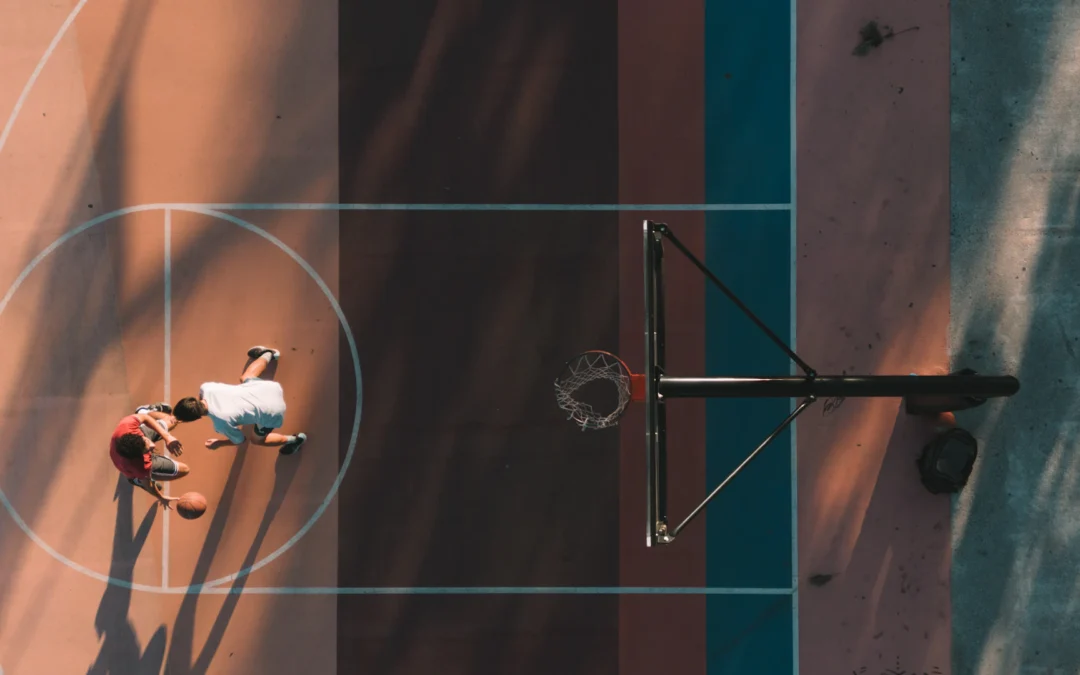
There is a shift happening on the courts at Colorado schools, parks, HOAs, and community centers that is hard to miss if you know what to look for. The old model, a single-sport asphalt court with faded paint and a bent hoop, is being replaced by something fundamentally different. Multi-sport surfaces that serve pickleball, basketball, futsal, and more on a single professionally installed surface are showing up in schoolyards, community centers, and HOA common areas along the Front Range. The organizations making these investments are not just spending money on a court. They are solving a problem that a single-sport surface never could, and they are doing it in a way that serves more people, justifies the investment to more stakeholders, and holds up through Colorado’s demanding seasonal cycles without the ongoing maintenance burden that aging asphalt and concrete create. At Rainbow Play Systems of Colorado, we install commercial sport courts for schools, parks, municipalities, HOAs, daycares, and community organizations across Colorado, and this guide breaks down what the smartest commercial court investments look like right now and why.
Why Multi-Sport Versatility Is the Standard That Smart Organizations Are Demanding
The single biggest shift in commercial court installations over the last few years is the move away from single-sport surfaces toward multi-sport configurations that serve the broadest possible range of users across the widest possible range of activities. For a school principal justifying a court investment to a school board, a parks director making the case to a city council, or an HOA property manager presenting options to a board of homeowners, the multi-sport argument is the one that wins budget approval.
A court that serves pickleball, basketball, and futsal on a single surface reaches students of different ages and interests, community members of different fitness levels and athletic backgrounds, and program directors who need one space to serve multiple activities on the same day. A single-sport court, however well built, serves a narrower constituency and is harder to justify when square footage and budget are limited.
Colorado’s pickleball boom is a significant driver of this shift. Pickleball is now the fastest growing sport in the country, and the demand for courts at schools, parks, and community centers is outpacing the supply of dedicated pickleball infrastructure by a wide margin. Organizations that are installing multi-sport surfaces are adding pickleball capability alongside basketball and other sports, which immediately serves the large and growing pickleball community while maintaining the basketball and multi-sport functionality that existing programs depend on.
Commercial indoor and outdoor courts at Rainbow Play Systems of Colorado details the commercial court options available for schools, parks, and community organizations across Colorado.
The SnapSports Surface Advantage for Commercial Installations
Commercial court installations have specific performance requirements that residential installations do not. High traffic volume means the surface needs to hold up through far more use cycles than a backyard court experiences. Diverse user populations mean the surface needs to perform safely across a wide range of athletic activities and ability levels. Outdoor exposure means the surface needs to handle Colorado’s freeze-thaw cycles, UV exposure, and precipitation without degrading in ways that create safety hazards or maintenance burdens.
SnapSports modular tile surfaces are engineered to meet all of these requirements. The interlocking tile system handles Colorado’s freeze-thaw cycles without the cracking and heaving that affect rigid poured surfaces over time. The surface drains efficiently after rain and snowmelt, which reduces the downtime that wet courts create for programs that depend on reliable access. And the modular design means that damaged sections can be replaced individually without resurfacing the entire court, which significantly reduces long-term maintenance costs compared to poured surfaces.
For schools and parks that need to document surface safety for insurance and liability purposes, SnapSports surfaces provide consistent, engineered performance characteristics that asphalt and concrete cannot match. The cushioned tile surface reduces the impact forces that contribute to joint injuries, which matters for both the student athletes and the adult users who play on commercial courts regularly. Transform your backyard with custom SnapSports courts shows what SnapSports surfaces look like in real installations and gives commercial decision-makers a sense of the finished quality before committing to the investment.
What Colorado Schools Are Prioritizing Right Now
Colorado schools are under pressure from multiple directions when it comes to outdoor recreation infrastructure. Physical education requirements demand adequate outdoor activity space. Recess policies require safe, engaging outdoor environments. After-school program administrators need flexible spaces that serve multiple activities. And facility managers are dealing with aging asphalt courts that are cracking, draining poorly, and creating liability concerns that school districts need to address.
The schools that are solving all of these problems with a single investment are the ones installing multi-sport court surfaces that replace aging asphalt with a modern, safe, versatile playing surface that serves PE classes, recess, after-school programs, and community use outside school hours. The investment is justified to school boards on the basis of serving more students, eliminating a liability concern, and creating a facility that the broader community can use outside of school hours in ways that build goodwill and community connection.
Pickleball is showing up in school PE programs across Colorado with increasing frequency, and schools that have installed pickleball-capable court surfaces are finding that the sport engages students who are not drawn to basketball or other traditional PE activities. The lower barrier to entry and the social nature of doubles play make pickleball particularly effective in PE settings, and having a dedicated court surface rather than a painted gym floor or a makeshift outdoor setup makes the experience significantly better for students and teachers alike.
Choosing playground equipment that meets school safety standards addresses the safety and compliance considerations that affect school facility investments including court surfaces and playground equipment.
HOAs and Community Centers: The Case for Courts as Community Infrastructure
Homeowners associations and community centers across Colorado are discovering that sport courts are one of the most effective amenity investments they can make for resident satisfaction and community engagement. A well-designed multi-sport court serves residents across age groups, creates a natural gathering point that builds community connection, and differentiates the community in ways that matter to prospective homebuyers evaluating HOA amenities.
The pickleball angle is particularly compelling for HOA amenity planners right now. Pickleball is especially popular with the active adult population that makes up a significant portion of HOA communities in the Denver metro area and along the Front Range. An HOA that installs a dedicated pickleball court or a multi-sport surface with pickleball capability is directly serving one of the most active and engaged segments of its resident population, and the social programming that naturally develops around a pickleball court, leagues, round robins, and casual play groups, creates community connection that no passive amenity can replicate.
For community centers that serve diverse populations across age groups and activity interests, the multi-sport surface investment is justified by its ability to serve programming across the full range of activities the center offers. A surface that handles pickleball in the morning, basketball in the afternoon, and youth futsal in the evening is doing more work per square foot than any single-sport surface, and that versatility directly supports the programming flexibility that community center directors need to serve their members effectively.
Create lasting memories with Rainbow Swingsets indoor and outdoor courts examines how court installations at community facilities create the kind of programming opportunities and resident engagement that HOA boards and community center directors are looking for.
Daycares and After-School Programs: A Different Kind of Court Investment
Daycares, after-school programs, and youth enrichment facilities have specific needs that differ from school and HOA court installations. The primary user population is younger, the activity programming is more structured and supervised, and the safety requirements are more stringent because the users are children who depend on adults to ensure the play environment is appropriate for their age and developmental stage.
For these facilities, the commercial court investment is often paired with playground equipment in a way that creates a complete outdoor activity environment rather than a standalone court. A multi-sport surface adjacent to a quality playground installation gives program directors the ability to rotate children between structured court activities and free play on the playground, which is both developmentally appropriate and practically valuable for managing groups of children across different age groups and energy levels.
The surface safety profile of a SnapSports court is particularly relevant for facilities serving young children. The cushioned tile surface reduces impact forces in ways that are meaningful for smaller bodies that are still developing coordination and spatial awareness. And the consistent, predictable surface characteristics reduce the tripping and slipping hazards that uneven or deteriorating asphalt creates for children who are running, stopping, and changing direction at full speed.
Commercial playground safety standards in Denver and what you need to know addresses the safety and compliance requirements that affect commercial outdoor facility investments including court surfaces for facilities serving children.
The Maintenance Reality of Commercial Court Surfaces
One of the most practical arguments for a modern commercial court surface installation over asphalt or concrete is the long-term maintenance picture. Asphalt and concrete surfaces require periodic resurfacing, crack repair, and line repainting that create recurring maintenance costs and periodic downtime. A cracked or heaving surface that is not repaired promptly becomes a liability concern and an aesthetic problem that reflects poorly on the facility.
SnapSports modular surfaces require significantly less maintenance than poured surfaces. Routine maintenance consists of cleaning and periodic inspection of tile connections rather than crack repair and resurfacing. Damaged tiles can be replaced individually without touching the rest of the surface, which means a localized impact or wear issue is addressed quickly and inexpensively rather than triggering a full resurfacing project.
For facility managers who are responsible for maintaining outdoor spaces on limited budgets, the lower maintenance burden of a modular surface is a meaningful operational advantage that should factor into the total cost of ownership comparison alongside the upfront installation cost. Snow proofing your SnapSports court in Denver winters addresses the winter maintenance considerations that Colorado facility managers face with outdoor court surfaces.
Planning a Commercial Court Installation in Colorado
The planning process for a commercial court installation is more involved than a residential project because the stakeholder landscape is broader, the approval processes are more complex, and the performance requirements are more demanding. Schools need to work within district procurement processes. HOAs need board approval. Community centers need to satisfy insurance and liability requirements. And daycares and youth facilities need to meet regulatory standards for outdoor activity spaces.
Rainbow Play Systems of Colorado has experience navigating all of these planning contexts and works with facility managers, administrators, and decision-makers at every stage of the process from initial site assessment through installation completion. The planning conversation starts with understanding the facility’s specific needs, user population, budget, and timeline, and develops from there into a court design that serves the facility’s actual requirements rather than a generic solution.
Commercial playground equipment in Colorado and a practical guide to safer longer lasting code smart installations outlines the planning and compliance considerations that affect commercial outdoor facility investments in Colorado.
Frequently Asked Questions About Commercial Court Installations in Colorado
What sports can a SnapSports multi-sport surface accommodate?
A properly configured SnapSports multi-sport surface can accommodate pickleball, basketball, futsal, volleyball, four square, and other court sports depending on the line configuration applied during installation. Each sport’s lines are applied in a distinct color to keep the court readable and intuitive for users playing different sports on the same surface.
How does a commercial SnapSports installation handle Colorado’s freeze-thaw cycles?
The modular interlocking tile design of SnapSports surfaces accommodates the expansion and contraction that Colorado’s freeze-thaw cycles produce without cracking or buckling. The drainage design allows water to escape the surface rather than pooling and freezing in ways that damage the surface or create safety hazards during winter conditions.
What is the typical timeline for a commercial court installation?
Commercial installation timelines vary based on the scope of the project, site conditions, and any facility-specific scheduling requirements. Rainbow Play Systems of Colorado provides a detailed project timeline as part of the planning process so that facility administrators can plan around the installation with confidence.
Can an existing asphalt or concrete surface be resurfaced with SnapSports tiles?
In many cases yes, depending on the condition of the existing surface. A site assessment determines whether the existing surface is suitable for tile installation or whether base preparation is needed. Resurfacing an existing poured surface can reduce project cost and timeline significantly when the underlying surface is in adequate condition.
What safety certifications apply to commercial SnapSports installations?
Testing and certification documentation depends on the specific SnapSports surface model selected. Rainbow Play Systems of Colorado can provide specific certification and compliance documentation relevant to your facility type and regulatory environment as part of the planning process.
How do we get started with a commercial court installation for our school, HOA, or community facility?
The first step is a conversation about your facility, your user population, your programming needs, and your budget. Contact Rainbow Play Systems of Colorado to schedule a site assessment and begin the planning process.
Colorado’s Best Facilities Are Investing in Courts That Work Harder
The organizations across Colorado that are making the smartest outdoor facility investments right now are the ones choosing multi-sport court surfaces that serve more people, support more programming, and hold up through more seasons than single-sport asphalt courts ever could. Schools, parks, HOAs, daycares, and community centers that make this investment are creating outdoor spaces that genuinely serve their communities rather than sitting underused because the surface does not match the activities people actually want to do. Rainbow Play Systems of Colorado installs commercial sport courts across the Denver metro area and the Front Range. Explore commercial court options or contact Rainbow Play Systems of Colorado to start the conversation about your facility.